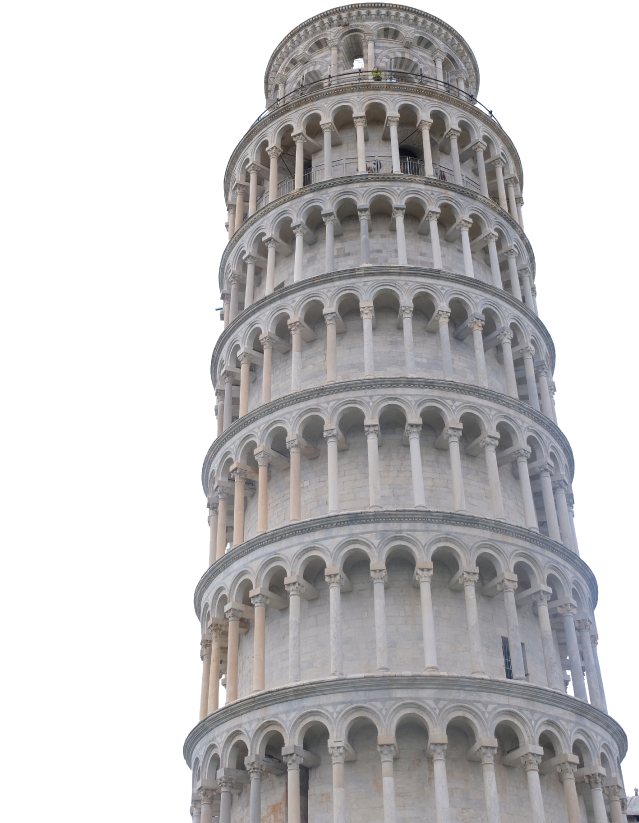
Why Invest in Italy?
Italy is not only the homeland of world-famous art, cuisine, and cultural heritage, but also one of Europe’s foremost hubs for strategic investment. In the midst of a rapidly shifting global capital landscape, Italy emerges as a premier destination where profitable opportunities meet an exceptional quality of life.
Italy is the 3rd largest economy in the EU and the 8th largest worldwide, with a GDP of over €2.128 trillion.
Italy is home to more than 60 million people, with a per capita income of over 30,000 USD.
It serves as a gateway not only to connect the European Single Market (500 million people) to North Africa and the Middle East (270 million people), but also between Southern Europe and Central & Eastern Europe.
Its infrastructure is world-class with 6,800 km of motorway (AISCAT, 2014), over 1,000 km of high-speed railway with maximum speeds at above 300 km/h and strategically-located seaports which support global trade and connectivity.
Top Leading Destination for Global Capital
- In 2023, Italy attracted €24.1 billion in foreign direct investment (FDI).
- According to the EY Attractiveness Survey Italy 2023, 88% of foreign-owned companies expect Italy’s investment appeal to remain stable or improve.
- Italy ranks among the Top 3 most attractive FDI destinations in the EU (FDI Report 2023).
Power of “Made in Italy” – A Global Brand
- Italy is the second-largest manufacturing powerhouse in Europe, just after Germany.
- It is renowned for excellence in machinery & automation, fashion & design, food & wine, and high technology.
- “Made in Italy” products are highly favored by the global middle class, with strong demand across BRICS markets.
- Italy ranks among the Top 10 strongest nation brands worldwide (Brand Finance, 2023).
Innovative Ecosystem & High-Quality Talents
- Italy is home to 20+ universities ranked among the world’s Top 500.
- Over 300,000 students graduate each year, supplying a skilled and knowledge-driven workforce.
- The Italian tax system provides strong incentives, granting a 40% deduction for machinery purchases and up to 150% for projects in digital technology and Industry 4.0.
- Labor costs remain highly competitive, lower than Germany (−10%) and France (−18%).

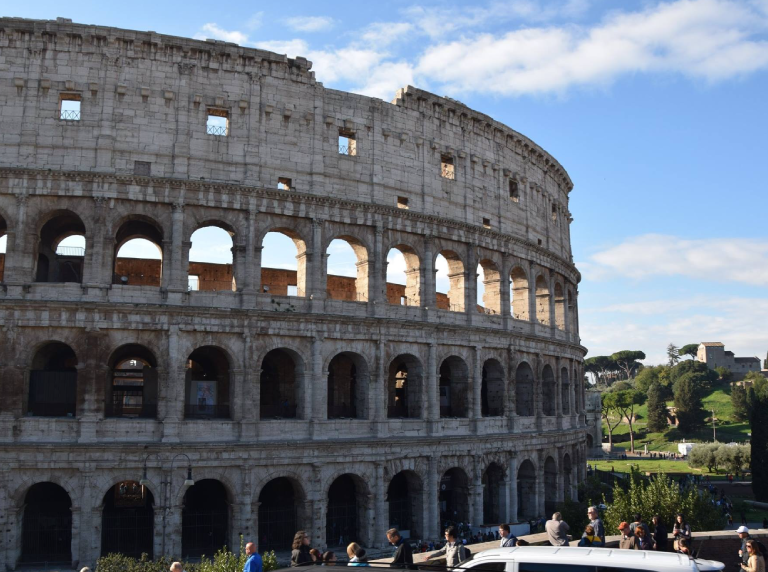
Unparalleled Life Quality & Cultural Heritage
- Italy ranks the top 1 worldwide for UNESCO World Heritage Sites with 61 recognized heritages.
- It is one of the world’s top tourist destinations, welcoming over 50 million international visitors each year.
- The cuisine, art, music, and lifestyle in Italy offer a truly unique experience found nowhere else
Italy Investor visa
Investment options (2025)
Applicants must fulfill one of the following investment requirements under the threshold as follows:
INNOVATIVE STARTUP INVESTMENT
- Projected Return: 5% per annum
- Investment Term: Minimum 5 years longer
- Capital Guarantee: Full repayment after 5 years
- Availability: Limited to 10 investment slots
REAL ESTATE FUND INVESTMENT
- Projected Return: Up to Circa 3X on original investment
- Investment Term: Minimum 5 years (up to 10 years)
- Capital Guarantee: Full repayment after 5 years
- Availability: Unlimited investment slots
RESORT DEVELOPMENT PROJECT
- Guaranteed Return: 4% per annum, paid quarterly
- Investment Term: Minimum 5 years or longer Capital
- Guarantee: Full repayment after 5 years
- Availability: 20 investment slots
COMPANY STOCK/SHARE INVESTMENT
- Return: Performance-based
- Investment Term: Min 5 years or longer as specified in the investment contract
- Capital Guarantee: under the invested enterprise’s terms
- Availability: Unlimited investment slots
CLASSIC FUND INVESTMENT
- Return: Performance-based, with an expected IRR of 9% per
- Investment Term: 5 years or longer as specified in the investment contract
- Capital Guarantee: No Availability: Unlimited investment slots
Get your Italy Investor visa today!
Have questions? Contact our experts at 0934623968 (available on WhatsApp)
Top Questions
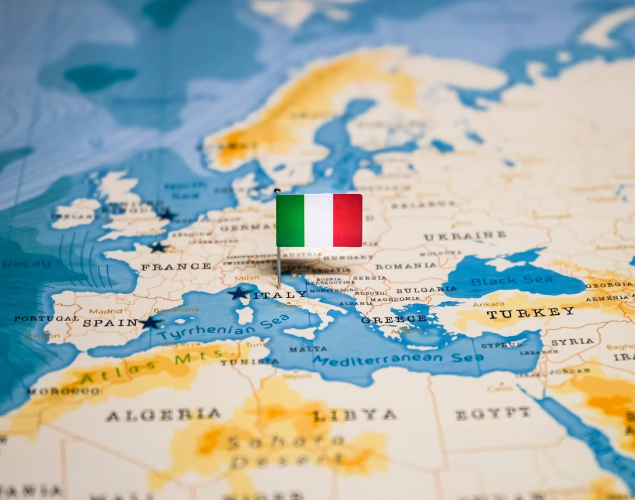
Italy is a country in south-central Europe, located on a peninsula that extends into the Mediterranean Sea . The Alps are situated at its northern border, separating Italy from France, Switzerland, Austria, and Slovenia . The Apennine Range runs down the length of the country . The country is surrounded by the Mediterranean Sea, specifically the Adriatic Sea to the northeast, the Ionian Sea to the southeast, the Tyrrhenian Sea to the southwest, and the Ligurian Sea to the northwest.
The capital of Italy is Rome.
Italy boasts a rich cultural heritage with many famous landmarks. The country is home to a wealth of monuments, churches, and palaces that testify to its cultural past . Ancient Roman towns such as Pompeii and Herculaneum near Naples, as well as the remains in Rome itself, are notable examples of Italy’s cultural heritage . Italy was at the forefront of artistic and intellectual developments during the Renaissance and is home to many historic city centers . Rome, one of the world’s oldest great cities, attracts visitors to its monuments and art .
Italian cuisine is celebrated for its regional diversity and high-quality ingredients . Northern Italy commonly uses rice and butter, while Southern Italy prefers pasta and olive oil .
Pasta is a central element, with countless variations of dried noodles . Spaghetti, a thin, cylindrical pasta, is among the most popular . Classic sauces include tomato, pesto (basil, parmesan, garlic, pine nuts, and olive oil), and meat-based Bolognese .
Pizza, with its simple bread dough topped with olive oil, oregano, tomato, mozzarella, and other ingredients, is another well-known dish . The Margherita pizza, with tomatoes, mozzarella, and basil, represents the colors of the Italian flag .
Other popular dishes include risotto, gnocchi, lasagna, tortellini, and a wide array of appetizers called antipasti . Coffee, especially espresso, and desserts like tiramisu are integral to Italian culinary culture .
The Roman Empire's historical significance lies in its military prowess, political and social institutions, and contributions to Western civilization . Originating from a small town in central Italy, Rome expanded to encompass a vast territory, including England, continental Europe, western Asia, and northern Africa .
The Empire's influence is evident in law, architecture, art, language, poetry, rhetoric, politics, and philosophy . Latin, the language of the Romans, evolved into the Romance languages, and their alphabet and calendar are still in use today . Roman engineering achievements, such as roads, aqueducts, and city planning, were unparalleled . The Roman Empire's success stemmed from incorporating conquered peoples into its social and political system, granting citizenship to those who adopted Roman ways . This integration fostered cohesion and facilitated the spread of Roman culture throughout Italy.
The Renaissance in Italy (circa 1340-1550) sparked a transformative period of art and culture, driven by renewed interest in nature, classical learning, and individualism . This era, marked by an "efflorescence of all the arts and intellectual life," saw artists, sculptors, and architects create works that celebrated human dignity, using observation and mathematical principles .
Italian city-states, propelled by economic wealth and rivalry, became centers of artistic innovation, influencing town planning and secularizing the arts . The rediscovery of classical texts and the invention of the printing press further revolutionized learning and education . Though initially focused on Italy, the Renaissance's impact soon spread across Europe, influencing art, science, and thought, and marking a shift from medieval to modern perspectives .
Italian culture and language are important today because Italy was at the forefront of the artistic and intellectual developments of the Renaissance . Italian is spoken by approximately 66,000,000 people, the vast majority of whom live in Italy . Italy is a world leader in high fashion, with Milan being a haven for models, designers, and photographers . Italian cuisine, with dishes like pasta and pizza, is a popular cultural export . Despite regional identities, the increasing influence of mass media and a shared school curriculum are integrating Italy more closely into the European Union.
Get A Free Consulting!
Ready to secure your Italy Investor Visa? Contact us for a free consultation and expert guidance
Our location
Via Lima 7
00198 Rome, Lazio, Italy
quick contact
Whatsapp: 0934623968
Email: info@investvisa.it
“ We will answer you within 24 hours via email, or you can call us directly, we are always ready to serve. Thank ”